What Earth Can Share
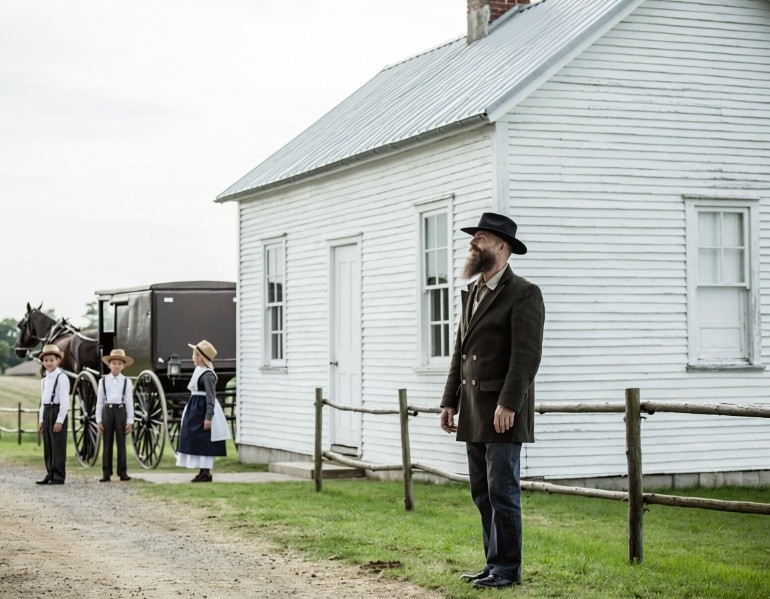
The morning bell rang from the schoolhouse long before the trade whistles echoed across the valley.
Children came carrying slates beneath their arms while the older boys and girls found seats on the hand-built benches.
Instead of writing lessons upon the chalkboard, Samuel carried a wooden crate into the room.
The children watched curiously.
One by one, he removed its contents and placed them across the teacher's table.
A loaf of fresh bread.
A sack of flour.
A wheel of cheddar cheese.
A jar of golden honey.
A bottle of clear artesian water.
A glass fruit jar.
A #10 can of tomatoes.
A corncob pipe.
A leather belt.
A pane of window glass.
The room became very quiet.
Emma raised her hand.
"Teacher..."
Samuel smiled.
"Yes, Emma?"
"Is this going to be show and tell?"
The room filled with soft laughter.
"In a way," Samuel replied.
He rested both hands on the table.
"Tell me something."
"What do all these things have in common?"
Hands immediately filled the air.
Sarah answered first.
"They were all made here."
Samuel nodded.
"Very good."
David pointed toward the bread.
"They're useful."
"That's true."
Another boy spoke.
"They're things people need."
Rebecca, who had quietly stepped into the back of the room, smiled proudly.
Samuel nodded once more.
"You're all right."
He paused before asking another question.
"If someone traveled across the stars to visit Earth..."
"...what would we have to offer them?"
Silence settled over the classroom.
Finally little Emma answered.
"We could share our tomatoes."
Everyone smiled.
"We certainly could," Samuel said.
He picked up the can of tomatoes.
"But is this really what we're building the Planetary Roundtable for?"
The children looked at one another.
Just then Buck Rogers entered carrying a wooden shipping crate.
Stamped neatly across its side were four simple words.
PRODUCT OF EARTH
He set the crate beside Samuel's desk.
"Mind if I help?"
"We'd be grateful," Samuel replied.
Buck opened the crate and began removing more examples.
Bundles of candles.
A folded quilt.
A polished horseshoe.
A wooden chair built in the furniture shop.
A box of glass jars.
A small keg of maple syrup.
A bundle of tobacco.
A carved wooden toy horse.
The children stared.
Samuel turned toward the chalkboard.
Instead of writing Inventory, he carefully printed four words.
Things Earth Can Share
"Now," he said, "let's make our list."
Hands shot into the air.
"Bread!"
"Honey!"
"Cheese!"
"Glass!"
"Furniture!"
"Water!"
"Candles!"
"Seeds!"
"Horses!"
"Tobacco!"
Every answer found its place upon the board.
Soon the chalkboard was nearly full.
Just then Galileo Maestro quietly entered the room.
He stood for a long moment studying the list.
Finally he asked,
"What do all these things have in common?"
The children looked back at the board.
Emma answered first.
"People made them."
Galileo smiled.
"Exactly."
He walked to the window overlooking the busy valley.
Beyond the schoolhouse children could see wagons rolling toward the pantry, smoke rising from the brickworks, the sawmill cutting fresh lumber, and the unfinished Planetary Roundtable slowly taking shape.
He turned back toward the class.
"The Planetary Roundtable isn't being built because Earth needs things."
His voice was quiet.
"It's being built because Earth finally has something worth sharing."
The room grew still.
Samuel nodded.
"And before we share with anyone else..."
"...we first make certain every family here has enough."
He looked around the room at the children who would someday inherit the valley.
"Hospitality begins at home."
The children nodded.
For the first time, they understood that the Planetary Roundtable was more than a remarkable building.
It was a promise.
A promise that when visitors crossed the stars to reach Earth, they would not find a world preparing for war.
They would find bread still warm from Rebecca's oven.
Clear water drawn from the artesian spring.
Windows that let light into homes.
Furniture built to last for generations.
Seeds saved with hope for another harvest.
And neighbors ready to welcome strangers as friends.
Outside the schoolhouse, the trade whistles echoed across the valley.
Lessons were over.
Work had begun.
But every child who walked out that morning carried something more valuable than arithmetic or spelling.
They understood why the Planetary Roundtable was being built.
Not to show the galaxy how powerful Earth had become.
But to show what people could accomplish when they chose to build, to work, and to share together.