The Good Earth • Saga #1 of the Planetary Roundtable
Chapter Six
What Can Be Saved
The first loaves from Galileo's flour mill did not last long.
Rebecca had barely set them on the table before children began hovering close enough to be noticed. She sliced the bread thick, spread butter across each piece, and handed them out with the stern kindness of a woman who knew exactly how hungry a growing settlement could be.
"Don't swallow without chewing," she told one boy.
He nodded solemnly, then immediately forgot.
Across the room, Samuel watched workers gather for the noon meal. They came in dusty from the brickworks, smelling of sawdust from the mill, and carrying the tired satisfaction of people who had earned their appetite.
Buck Rogers sat beside Samuel and opened his clipboard.
"I've been counting again."
Samuel smiled.
"That sounds dangerous."
"It is when the numbers are hungry."
Rebecca overheard him and turned.
"How hungry?"
Buck glanced at his notes.
"Hungry enough that if this settlement keeps growing, your kitchen will need more than today and tomorrow. We'll need food put away for weeks. Maybe months."
Rebecca grew quiet.
That was not fear on her face.
It was calculation.
"We've got gardens coming in," she said. "Milk, butter, cheese soon enough. Flour now. Meat when needed. But Buck is right. Food that isn't saved is food half-wasted."
Samuel nodded.
"What do you need?"
Rebecca looked toward the shelves where crocks, bowls, and kettles had already been claimed for daily use.
"Jars."
The word settled on the table heavier than anyone expected.
Elias, who had been quietly eating near the end of the bench, looked up.
"Glass jars?"
Rebecca turned toward him.
"Glass jars with lids tight enough to hold what we put inside them."
Buck tapped his pencil against the clipboard.
"We don't have enough."
"No," Elias said. "But I may know where there are thousands."
Every face near the table turned toward him.
Samuel leaned back.
"That sounds like a story."
Elias wiped his hands on a cloth and folded it neatly.
"Before all this, there was a glass factory two towns over. It had been closed for years. They made bottles, jars, and window glass. The place still had crates stacked inside the warehouse the last time I passed it."
Buck's eyes sharpened.
"How long ago?"
"Long enough that I wouldn't promise anything. Not so long that I'd forget where it stands."
Rebecca stepped closer.
"Could the jars still be usable?"
"If they haven't been broken or taken," Elias said, "glass waits better than people do."
Samuel looked toward Buck.
"Can we spare a wagon?"
Buck flipped through his pages.
"We can spare one team for a day, maybe two. We'd need someone methodical."
Samuel and Rebecca both looked at Buck.
Buck lowered his clipboard.
"I walked into that one."
Elias smiled.
"I'll go with him. If the factory can be moved, salvaged, or restarted, I can tell you what we're looking at."
Samuel grew thoughtful.
"We need jars first. A factory later."
"Agreed," Elias said. "But if the equipment is there, we should know. A settlement that can preserve food can survive. A settlement that can make jars can grow."
Rebecca nodded firmly.
"And a settlement that cans peaches in summer can taste summer during a hard season."
Several women nearby murmured agreement.
Samuel stood.
"Then it's settled. Buck and Elias will take a wagon to the old glass factory."
Buck made a note.
"Water barrel. Tools. Rope. Blankets for packing. Food for the road."
Rebecca pointed at him.
"And you will stop by my kitchen before you leave. I won't have you two running off with empty stomachs and calling it courage."
Buck wrote that down too.
"Rebecca's kitchen. Mandatory."
Samuel laughed.
"That may be the most important item on the list."
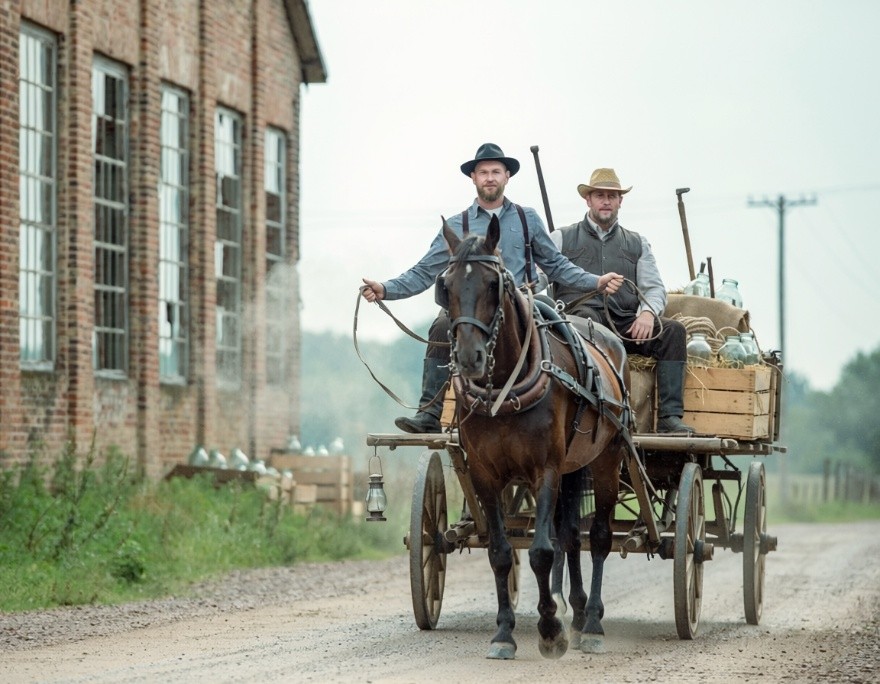
By midafternoon, Buck and Elias had begun preparing the wagon.
They chose two steady horses, filled a barrel with drinking water, and packed hammers, pry bars, rope, burlap, straw, and canvas. Elias added a small tool roll of his own, wrapped in worn leather.
Buck noticed it.
"What's in there?"
"Questions," Elias said.
Buck waited.
Elias tied the roll shut.
"And the tools that answer them."
At Rebecca's kitchen, two cloth sacks waited on the table.
"Hard bread, dried meat, apples, cheese, and two jars of preserves," Rebecca said.
Buck lifted one eyebrow.
"You're sending jars to fetch jars?"
"I'm sending reminders," Rebecca replied. "Bring them back full or bring back better ones."
Elias accepted the food with a slight bow.
"We'll do our best."
Rebecca softened.
"I know."
Samuel walked with them to the wagon.
"Don't take foolish risks," he said. "If the road is blocked, come back. If the place has been stripped, come back. If anything feels wrong, come back."
Buck climbed onto the wagon seat.
"That's a lot of ways to come back."
Samuel rested one hand on the wagon.
"Coming back is the important part."
Elias climbed up beside Buck.
"We'll bring back what we can."
The horses stepped forward, and the wagon rolled away from the settlement.
Children ran beside it for a short distance before Rebecca called them back.
Buck looked over his shoulder at the houses, the barn, the kitchen smoke, the brick rows, and the turning waterwheel.
"It grows fast when you're standing inside it," he said.
Elias nodded.
"That's why we have to think ahead."
After the wagon disappeared beyond the bend, Samuel remained beside the road for a while.
Galileo joined him with flour still dusting his sleeves.
"Glass jars," Galileo said.
Samuel nodded.
"Rebecca asked for them like she was asking for a spoon."
"She understands civilization."
Samuel looked at him.
Galileo smiled faintly.
"Most people think civilization begins with laws, maps, councils, and monuments. Perhaps it does, eventually. But before all that, someone must decide that today's harvest should feed tomorrow's child."
Samuel watched the road where Buck and Elias had gone.
"Then jars are more important than they look."
"Most important things are," Galileo said.
For a moment they stood quietly, listening to the settlement working around them.
The millstones turned.
Hammers rang.
Children called to one another.
From Rebecca's kitchen came the steady sounds of women preparing the next meal.
Samuel finally smiled.
"We started with houses."
Galileo nodded.
"Now you're building memory."
"Memory?"
"Yes," Galileo said. "Food saved in jars is a promise. It says we expect to be here when the lid is opened."
Beyond the settlement, the road waited.
Ahead of Buck and Elias lay an abandoned factory, a warehouse full of possibilities, and perhaps the first step toward preserving more than food.
Perhaps they were learning how to preserve a future.
The Good Earth • Saga #1 of the Planetary Roundtable